
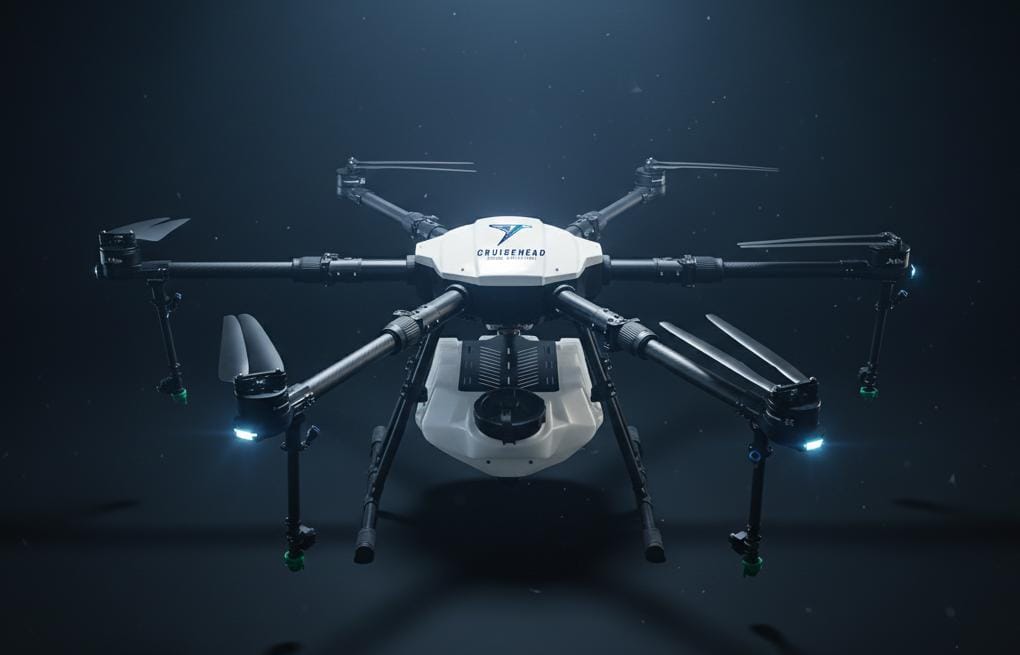
Why this debate matters in 2026
Agriculture drones are no longer a future concept in India. They are already part of the conversation around spraying, crop monitoring, precision application and rural service entrepreneurship. But as adoption increases, farmers and drone operators are also facing an important choice: should India continue depending on imported Chinese drones, or should it strengthen Indian-made agriculture drones built for Indian conditions?
This is not only a buying decision. It is also a national development question. In the era of Make in India and Atmanirbhar Bharat, every sector that matters to productivity, rural livelihoods and technology leadership must move toward stronger domestic capability. Agriculture drones are one of those sectors.
Why Indian farmers should support Make in India
Make in India is not just a slogan. It is a practical manufacturing vision. When Indian farmers, FPOs, rural entrepreneurs and spray service providers choose Indian drone systems, they help build local engineering, local jobs, local repair networks and long-term domestic capability.
Atmanirbhar Bharat also means reducing unhealthy dependence on imports in critical technologies. A country as large and agriculture-dependent as India should not rely heavily on external supply chains for something as strategically important as smart farm automation.
- More Indian manufacturing means more local jobs.
- More local assembly and design means faster improvements for Indian farm conditions.
- More domestic demand means stronger Indian drone brands and better support networks.
- Less import dependence means better long-term resilience.
The problem with Chinese drones
Chinese drones became popular because they entered global markets early and scaled fast. But popularity is not the same as national suitability. Indian farmers should look beyond glossy marketing, imported brand value and short-term price attraction.
The biggest weakness of Chinese drone dependence is strategic dependence itself. If the drone, major electronics, software logic, spare parts and service ecosystem are all controlled from outside India, then Indian agriculture operators remain vulnerable. A delayed component, a locked software environment, an unavailable battery, or an uncertain support chain can stop operations at the worst possible time.
For a farmer or custom-hiring operator, that is not a small issue. It directly affects spraying schedules, pest control timing and income.
Cheap imports can become expensive in the field
Many imported products look attractive during purchase because the upfront pricing seems competitive. But agriculture is not run on brochure prices. It runs on uptime, maintenance, field reliability and quick problem-solving.
If a drone breaks during the peak spray season and the operator has to wait days or weeks for the right spare part, the real loss is much bigger than the original price gap. Imported dependence can create hidden costs:
- Longer repair waiting periods.
- Uncertain spare-part supply.
- Higher dependence on a limited dealer chain.
- Reduced control over software and component access.
- Less flexibility for localized improvements.
In Indian farming, timing matters. A delayed spray is not just a technical inconvenience. It can mean lower crop protection and weaker seasonal returns.
Indian drones understand Indian reality better
Indian farm conditions are different from the large, uniform agricultural environments often shown in international drone marketing. India has fragmented holdings, mixed crops, village-level service models, irregular field shapes, heat, dust, bunds, power challenges and intense seasonal operating windows.
Indian drone makers are in a stronger position to design around these realities. They can build for actual operator behavior in villages, actual service expectations and actual maintenance conditions on the ground. That local understanding is a serious advantage.
A good Indian agriculture drone is not just a flying machine. It is part of an Indian rural operating system that includes training, service, support, transportation, charging, repair and farmer trust.
Why after-sales support matters more than hype
One of the biggest reasons Indian drones deserve preference is after-sales support. A drone is not a decorative product. It is a working machine. Like any working machine, it must be repaired, calibrated, serviced and kept ready for repeated field operations.
Indian manufacturers and Indian service networks are far better positioned to build fast response systems within the country. That gives farmers and operators a practical advantage:
- Quicker technician access.
- Faster spare-part dispatch.
- Local language communication.
- Easier pilot training and retraining.
- Better adaptation based on farmer feedback.
This is exactly where imported Chinese systems often fall short for Indian users. Support may exist on paper, but field response speed is what matters in reality.
Atmanirbhar Bharat is also about technology confidence
India cannot become a serious drone nation if it only assembles or operates imported dependence. True Atmanirbhar Bharat means India must steadily build its own confidence in design, manufacturing, testing, service and innovation.
Agriculture drones are especially important because they sit at the intersection of food production, rural livelihoods, manufacturing and emerging technology. If India gets this sector right, the benefits go far beyond one industry. The country gains stronger technical capacity, wider skilling and a more mature domestic drone ecosystem.
Farmers should ask the right questions before buying
The right question is not, “Which drone looks more famous?” The right question is, “Which drone will serve my farm or my spraying business better over time?”
- Can I get support quickly during the season?
- Are spare parts available in India?
- Is the manufacturer serious about local service?
- Is the drone suited to Indian crop and field conditions?
- Will this purchase strengthen an Indian ecosystem or deepen import dependence?
Once farmers start asking these questions honestly, the value of Indian agriculture drones becomes much clearer.
The larger national interest
When Indian buyers support Indian drone companies, they do more than purchase a product. They help create capability in a strategic technology sector. They strengthen domestic manufacturing. They encourage engineering talent to stay focused on local innovation. They help the country move closer to the spirit of Make in India and Atmanirbhar Bharat.
By contrast, heavy reliance on Chinese drones may appear convenient in the short term, but it weakens the long-term national objective of self-reliance. India should not become only a market for foreign drone products. It should become a builder of world-class drone systems.
Final word
In 2026, Indian farmers have a chance to do more than adopt drone technology. They have a chance to shape the direction of that technology in India.
The strongest choice is clear: support Indian agriculture drones, support Indian manufacturing, support Indian service ecosystems and support the national mission of technological self-reliance. Make in India and Atmanirbhar Bharat will succeed not only through policy, but through everyday buying decisions made across farms, villages and agri-enterprises.
Chinese drones may offer visibility and market familiarity, but India’s future should not be built on imported dependence. Indian agriculture deserves Indian drone leadership.