From quadcopter basics to NCC exposure
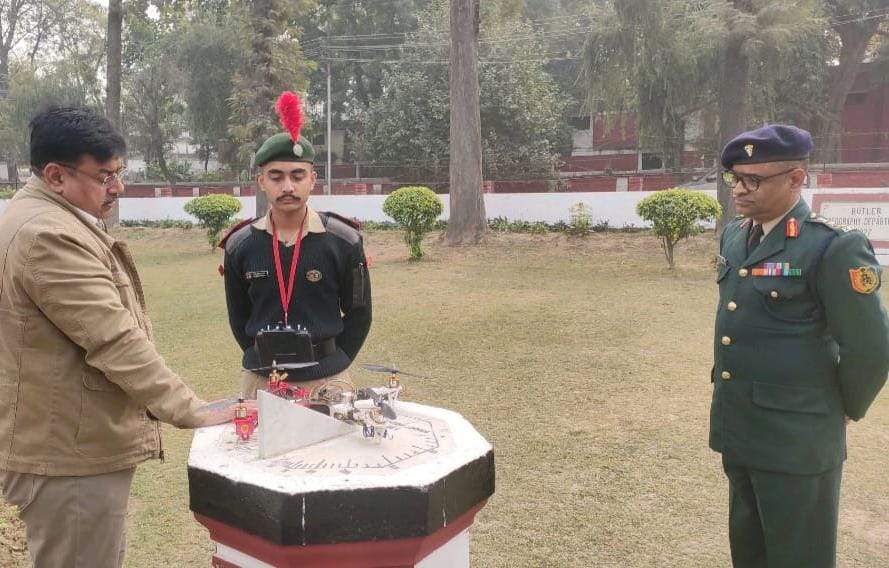
Saubaan’s journey with drones at University Polytechnic, AMU started with a quadcopter project built as part of the Diploma in Electronics and Communication Engineering, where students learned how flight controllers, ESCs, motors and radio systems work together in real UAVs.
These early builds were not just showpieces; they became teaching tools for peers, NCC cadets and younger students, helping them see how classroom electronics and physics turn into stable multirotor flight and useful aerial platforms.
Delivery drone prototype for smart campus missions
Building on this foundation, Saubaan worked as part of a final‑year student team that developed an autonomous delivery drone prototype capable of carrying small payloads around the AMU campus under guided missions.
Under the mentorship of faculty members Prof. Arshad Umar, Dr. Tanveer Hasan and Dr. Mohd Ayyub Khan, the team executed multiple test flights and delivery missions, showing how carefully tuned drones can move items between points without needing a full human escort on the ground.
- Autonomous route planning and waypoint‑based flights around campus paths.
- Payload mounting that protects electronics while keeping the drone balanced.
- Safety checks before each mission so students and staff remain safe during tests.
Agriculture drone prototype for precision spraying
Alongside delivery work, Saubaan also contributed to the development of an agriculture drone prototype focused on helping farmers spray fields more evenly, with onboard tank, pump and nozzles tailored for Indian crop conditions.
The agriculture drone project highlighted how student teams can respond to real rural problems, by using drones to reduce human exposure to chemicals, cut labour time and support more consistent coverage across plots of different shapes and sizes.
Connecting NCC discipline with drone engineering
Through workshops and informal sessions, Saubaan linked NCC values like discipline, responsibility and teamwork with drone engineering practice, showing cadets that UAS are not just gadgets but serious systems that require planning, logs, safety boundaries and clear roles in any mission.
When cadets and students handled the drones, they were encouraged to think like operators and engineers at the same time, checking surroundings, imagining real surveillance or support use cases, and understanding where strict rules and ethical limits must always be respected.
Why this work matters for future UAV talent
Together, the quadcopter, delivery drone and agriculture drone efforts show how one student’s interest, combined with NCC exposure and faculty support, can create a small but meaningful ecosystem of drone learning on a single campus.
For CruiseHead, stories like this underline why hands‑on engineering, campus collaboration and NCC engagement are important for building the next wave of UAV talent that understands both technical depth and field reality in India.